
 7 min read
Serverless vs Containers in 2026: Which Architecture Is Right for You?



The serverless vs containers debate isn't new, but in 2026 the lines have blurred considerably. Both architectures power cloud-native applications, yet they solve different problems in distinct ways. If you're building a new product, migrating legacy systems, or scaling an existing service, understanding which approach fits your needs can save thousands in cloud costs and engineering hours.
This guide breaks down the practical differences between serverless computing and container-based deployments, when each shines, and how to decide which path makes sense for your team.
What Is Serverless Computing?
Serverless doesn't mean "no servers." It means you don't manage them. You write functions, deploy them to a platform like AWS Lambda, Google Cloud Functions, or Azure Functions, and the provider handles provisioning, scaling, and maintenance. You're billed only for actual execution time, often down to the millisecond.

Key serverless characteristics in 2026:
- Event-driven execution: functions trigger in response to HTTP requests, queue messages, database changes, or scheduled events.
- Automatic scaling: the platform scales from zero to thousands of concurrent invocations without configuration.
- Pay-per-use pricing: you're charged for compute time and invocations, not idle capacity.
- Stateless by design: each function invocation is independent, pushing state to external databases or caches.
Modern serverless platforms have expanded beyond simple functions. Services like AWS Lambda now support container images up to 10 GB, longer execution windows (up to 15 minutes), and provisioned concurrency to eliminate cold starts for latency-sensitive workloads.
What Are Containers?
Containers package your application code, runtime, libraries, and dependencies into a single portable unit. Docker popularized this model, and Kubernetes became the de facto orchestrator for running containers at scale across clusters of machines.
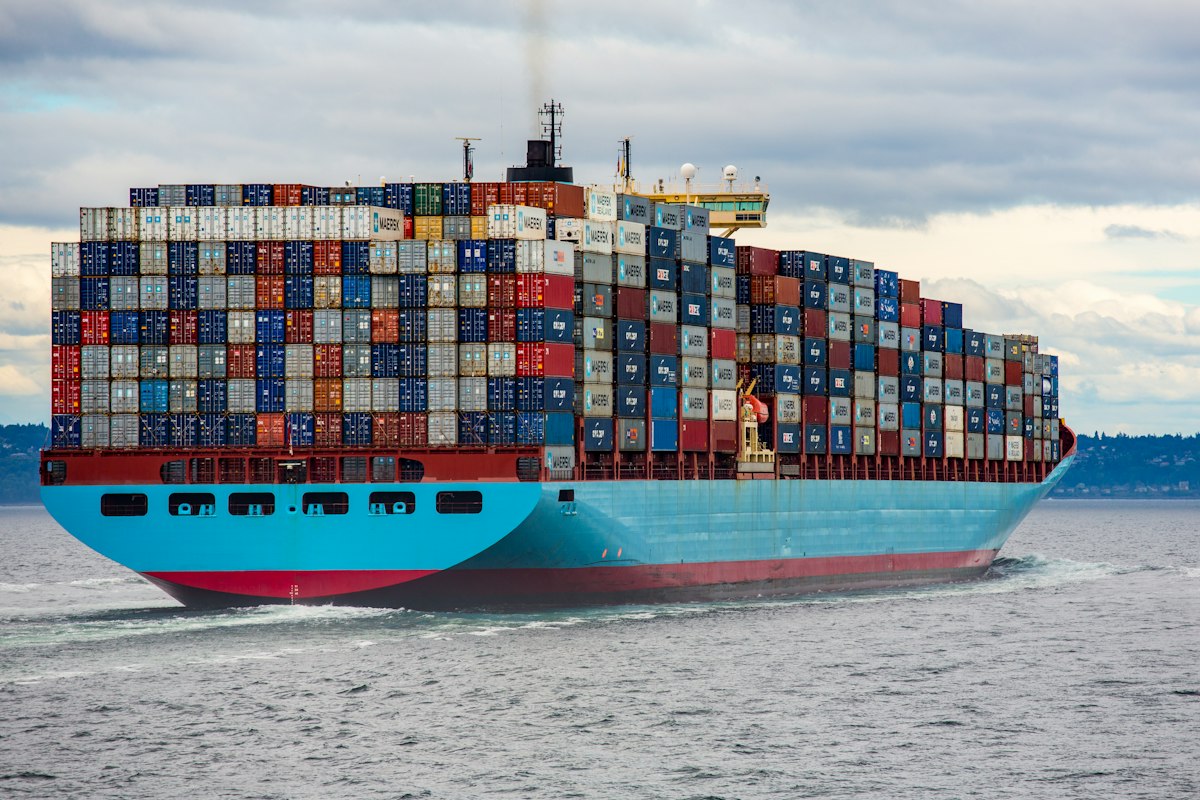
Container deployment in 2026 typically means:
- Full control over the runtime: you choose the OS, libraries, languages, and versions.
- Long-running processes: containers handle web servers, background workers, databases, and stateful services.
- Horizontal scaling: orchestrators like Kubernetes scale pod replicas based on CPU, memory, or custom metrics.
- Predictable billing: you pay for the underlying compute instances (VMs or nodes), whether containers are busy or idle.
Containers are flexible. You can run a monolith, microservices, batch jobs, or ML inference servers in the same cluster. Kubernetes provides sophisticated scheduling, rolling updates, health checks, and service discovery out of the box.
Cost Comparison: When Each Model Wins
Cost is rarely simple. Serverless can be cheaper for intermittent workloads, while containers often win for steady, high-volume traffic.
Serverless is cost-effective when:
- Traffic is sporadic or unpredictable (e.g., webhooks, overnight batch jobs, prototypes).
- You need to scale to zero during idle periods.
- Your workload fits within execution time and memory limits.
Example: a webhook processing 1,000 requests per day, each taking 200ms, might cost a few dollars per month on Lambda. The equivalent container running 24/7 could cost $30-50 in reserved capacity, even if mostly idle.
Containers are cost-effective when:
- You have steady baseline traffic that keeps instances busy.
- Workloads run longer than serverless execution limits.
- You can optimize instance size and use reserved or spot pricing.
Example: an API serving 10 million requests per month with consistent load will likely cost less on a right-sized Kubernetes cluster with autoscaling than on serverless, where per-invocation and data transfer fees add up.
In 2026, hybrid approaches are common. Teams run APIs and background workers in containers, but offload image processing, scheduled cleanups, or integration triggers to serverless functions.
Performance and Latency Considerations
Cold starts remain serverless's biggest performance challenge. When a function hasn't run recently, the platform must initialize a new execution environment, which can add 100ms to several seconds of latency. Provisioned concurrency mitigates this but reintroduces the cost of idle capacity.
Containers on Kubernetes don't have cold starts in the same way. Pods stay warm as long as they're running. Horizontal pod autoscaling (HPA) can add new pods in response to load, which takes 30-60 seconds, but existing pods handle requests immediately.
For latency-sensitive applications (real-time APIs, gaming backends, financial transactions), containers often provide more predictable p99 response times. Serverless works well for async workloads, scheduled jobs, and workflows where occasional cold starts are acceptable.
Developer Experience and Operational Complexity
Serverless platforms abstract infrastructure. You deploy code, configure triggers, and the platform does the rest. There's no cluster to manage, no OS patches, no capacity planning. This is a massive win for small teams or rapid prototyping.

The tradeoff: less control. Debugging is harder (limited logs, no SSH access), vendor lock-in is real (each provider's function format and integrations differ), and complex workflows require orchestration tools like AWS Step Functions.
Containers demand more operational expertise. Kubernetes has a steep learning curve. You're responsible for cluster upgrades, networking, storage, secrets management, and monitoring. Tools like Helm, Prometheus, and Grafana help, but there's overhead.
However, containers offer portability. The same Docker image runs locally, in CI/CD, on AWS EKS, Google GKE, Azure AKS, or your own datacenter. This flexibility matters for teams with multi-cloud strategies or regulatory requirements.
Use Cases: Where Each Architecture Excels
Choose serverless for:
- Event-driven workflows: processing S3 uploads, reacting to database changes, handling webhooks.
- Scheduled tasks: nightly ETL jobs, report generation, cache warming.
- Microservices with variable load: internal APIs that see bursts of traffic.
- Rapid prototyping: building MVPs without infrastructure overhead.
Choose containers for:
- Stateful applications: databases, message queues, caching layers.
- Long-running processes: WebSocket servers, video encoding, ML training.
- High-throughput APIs: services with consistent, high request volumes.
- Complex dependencies: apps requiring specific OS libraries, GPU access, or custom networking.
Hybrid examples in 2026:
- A SaaS platform runs its core API on Kubernetes for predictable latency, uses Lambda functions to process uploaded files, and deploys a separate containerized service for background email sending.
- An e-commerce site handles checkout traffic with containers but uses serverless for order confirmations, inventory updates, and integration with third-party shipping APIs.
Making the Decision for Your Team
Start with these questions:
- What's your traffic pattern? Steady or spiky?
- What's your team's infrastructure experience? Can you manage Kubernetes, or do you need simplicity?
- What are your latency requirements? Can you tolerate cold starts?
- Do you need portability? Are you locked into one cloud provider?
- What's your budget for idle capacity? Can you afford always-on infrastructure?
Neither architecture is universally better. Serverless excels at reducing operational burden and costs for the right workloads. Containers provide flexibility, control, and efficiency for complex, high-volume systems. Many successful teams use both, choosing the right tool for each job.
If you're building a new project in 2026, consider starting serverless for speed and simplicity, then migrating specific services to containers as you hit scaling or performance limits. This incremental approach lets you learn what your workload actually needs, rather than over-engineering upfront.
The Future: Convergence and Abstraction
The gap between serverless and containers continues to narrow. Platforms like Google Cloud Run and AWS Fargate let you deploy containers without managing clusters, blending the simplicity of serverless with the flexibility of containers. Kubernetes projects like Knative bring serverless-style autoscaling (including scale-to-zero) to containerized workloads.
In 2026, the trend is clear: developers want to focus on code, not infrastructure. Whether that's achieved through pure serverless functions, managed container platforms, or hybrid orchestration, the winning strategy is choosing the level of abstraction that matches your team's needs and your application's demands.
If you're weighing serverless versus containers for your next project, the right architecture depends on your specific requirements. At Stardelite, we help teams design and build cloud-native applications tailored to their workloads, whether that's serverless, containerized, or a blend of both. Reach out at https://www.stardelite.dev/contact to discuss your project.
References
Share this:



 8 min read